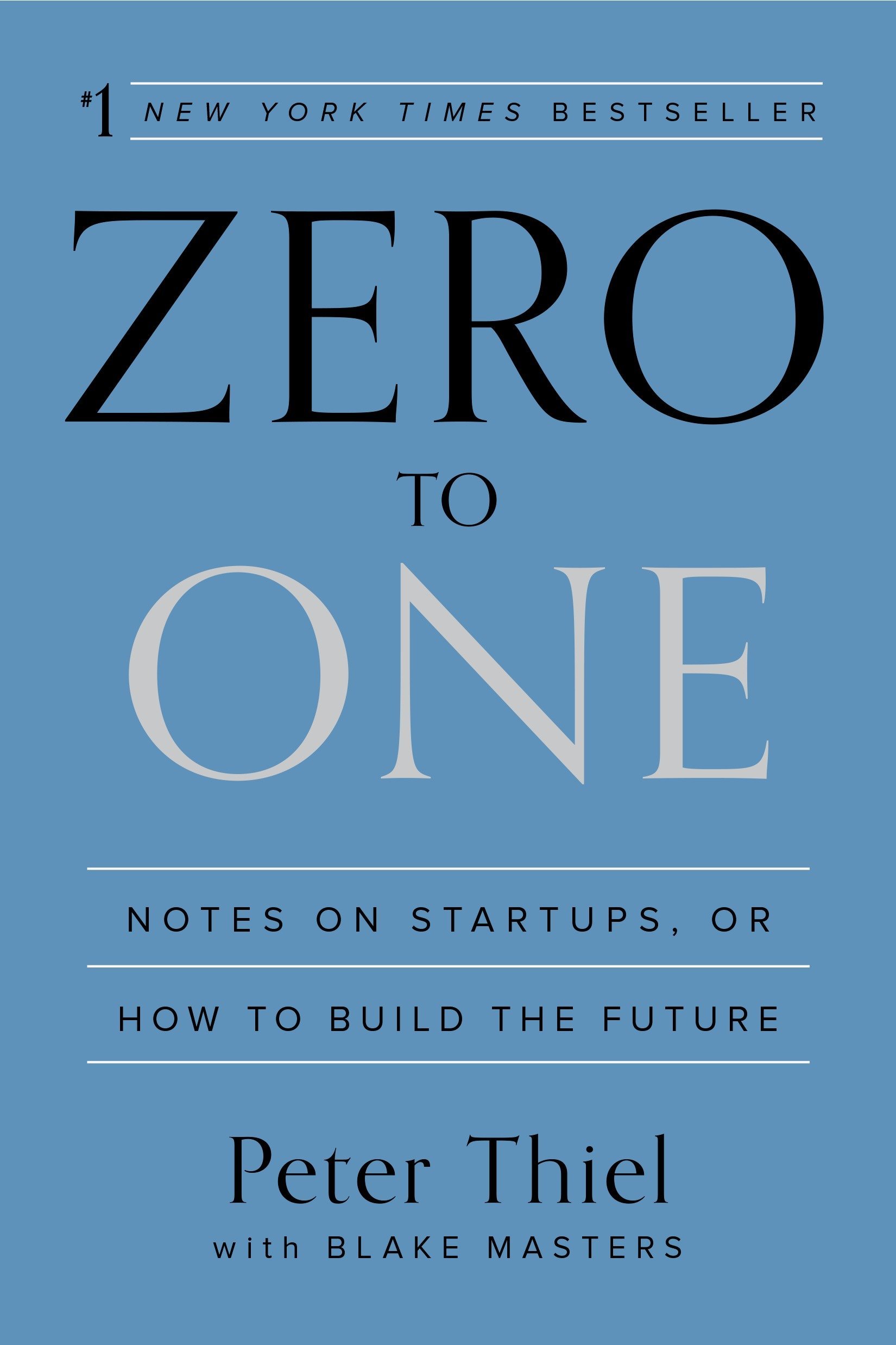
Zero to One: Notes on Startups, or How to Build the Future is a 2014
book by the American entrepreneur and investor Peter Thiel co-written
with Blake Masters. It is a condensed and updated version of a highly
popular set of online notes taken by Masters for the CS183 class on
startups, as taught by Thiel at Stanford University in Spring 2012.
A character as well known and controversial as Peter Thiel is at
something of a disadvantage as an author. The reader should maintain
an open mind and evaluate Thiel’s opus critically.
The future is a time when things will look differently than they do
today. By this definition, the future might not happen for another
100 years if nothing changes. On the other hand, the future might
come tomorrow if there is rapid change. We don't know much about the
future, but we do know that it will be different from the present
and that it will emerge from today's world. There are two different
kinds of progress. Horizontal progress occurs from copying things
that work. It's going from one to n, so that if you have a
typewriter and then you build 100 more, you've achieved horizontal
progress. Vertical progress is achieved by doing something wholly
new. It means going from zero to one. This kind of progress is hard
to imagine, because it's something that's never been done before. If
you have a typewriter and then you build a word processor, you've
achieved vertical progress. Globalization—taking things from one
place and applying them everywhere else—is horizontal progress.
Vertical progress comes from technological breakthroughs, and
“technology,” by the way, doesnt just describe computers. Any new
way of doing things can be called technology. Globalization and
technology are two different kinds of progress that might or might
not happen concurrently. You can have one type without the other,
you can have both, or maybe neither of them. Between the two kinds,
technology will be the defining force of the future. There's a
tendency to imagine that we're nearing some sort of end state. Even
the expression “developed world” implies that some countries have
climbed the mountain and that “undeveloped” countries just need to
catch up. Our technology isn't sustainable, however, especially if
everyone else adopts it. We have limited resources and our
environment can't endure the pollution that level of “development”
would generate. Globalization without advances in technology would
devastate the planet. At one time, people thought technology would
continue to improve in all directions. We wouldn't have to work so
many hours, we'd be riding in flying cars, we'd be taking vacations
to the moon. The only area that's seen real vertical progress,
however, is computer technology. Progress isn't a given; it doesn't
happen automatically. We must first imagine and then create the
world in which we want to live. New technology comes from startups.
Big organizations lumber around uselessly, and individuals don't
have the resources to create an entire industry. Small, agile groups
foster innovation'